 Next Gen Dental Clean

My hygienist stared at my teeth for exactly three seconds before setting her tools down. The room fell dead silent.
She pulled down her mask and whispered a question that caught me completely off guard: "You've been to Asia recently, haven't you?"
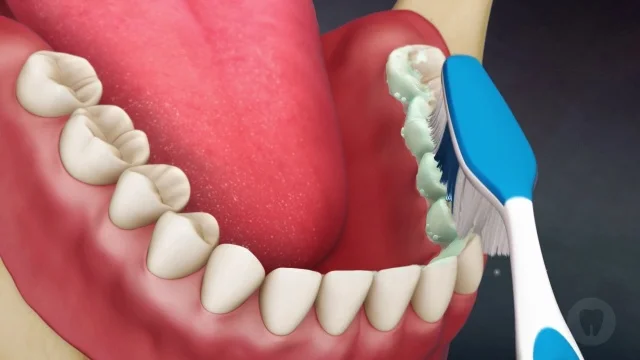
I was stunned. Before I could even answer, she sighed and continued: "In Japan, almost nobody under 40 uses a traditional nylon toothbrush anymore. They haven't for five years. Switzerland, Singapore, China—they’ve all moved on."
She pointed to my X-ray: "While you—and most Americans—are still scrubbing with ancient bristle friction technology, the rest of the developed world has quietly completed a revolution: Ultrasonic."
The truth came out through my daughter’s exchange student from Tokyo.
One morning, she looked at the clutter on my bathroom counter—expensive sonic electric brushes, water flossers, three different prescription rinses, denture tablets—and looked genuinely puzzled. "Why do you need so many tools?"
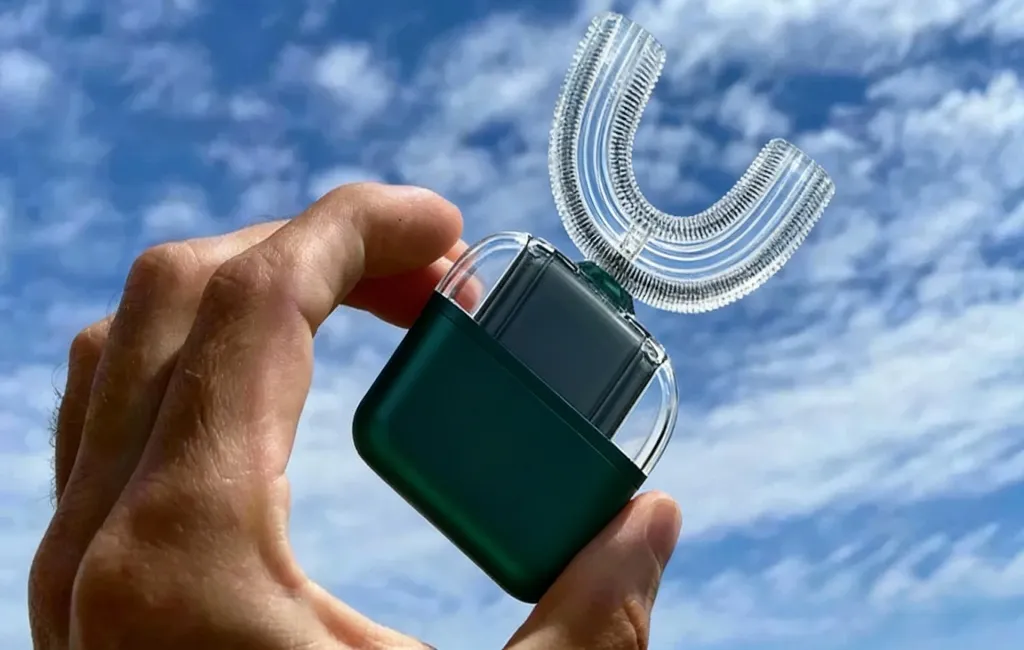
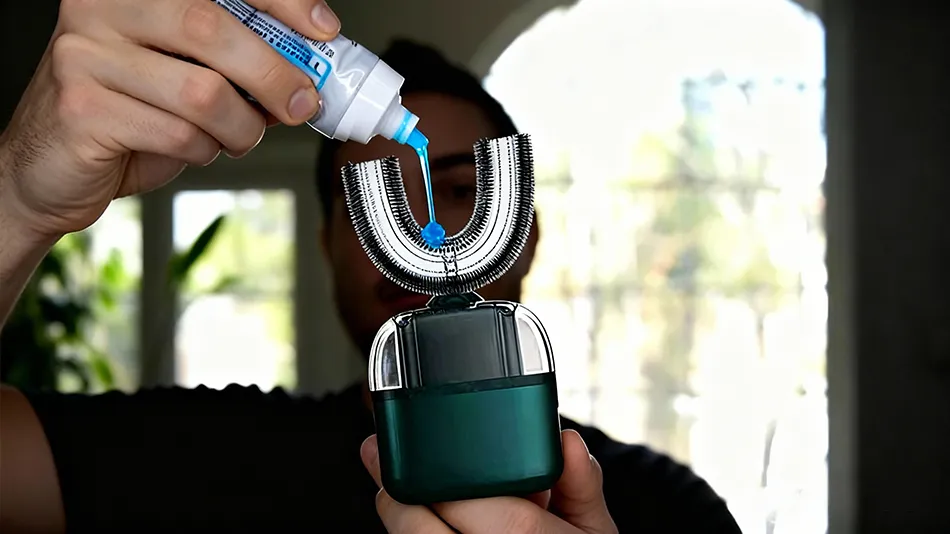
Then, she pulled out something from her bag that looked like a transparent mouthguard. "This one thing does everything."
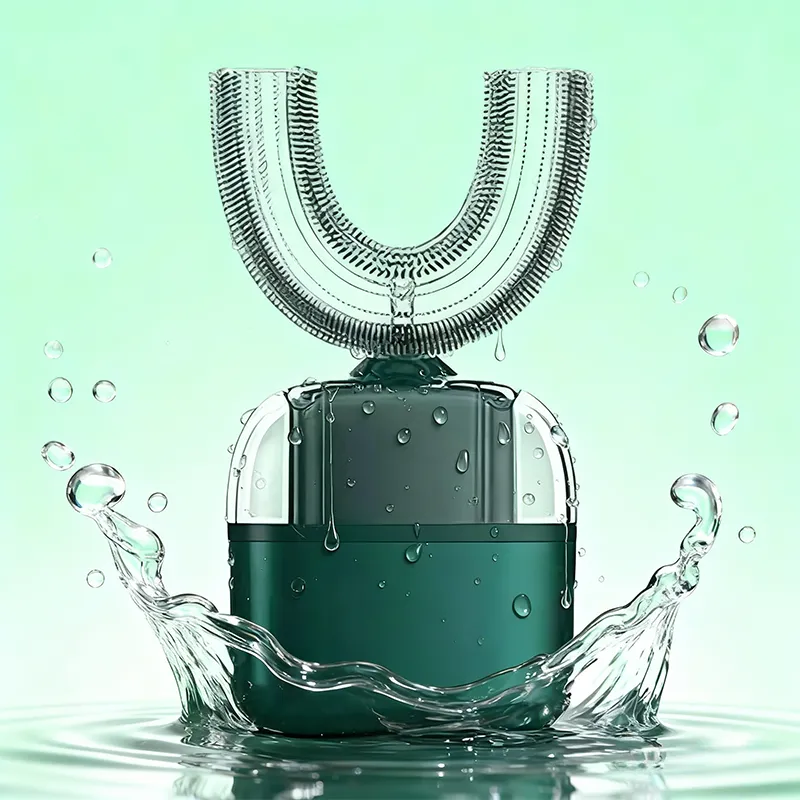
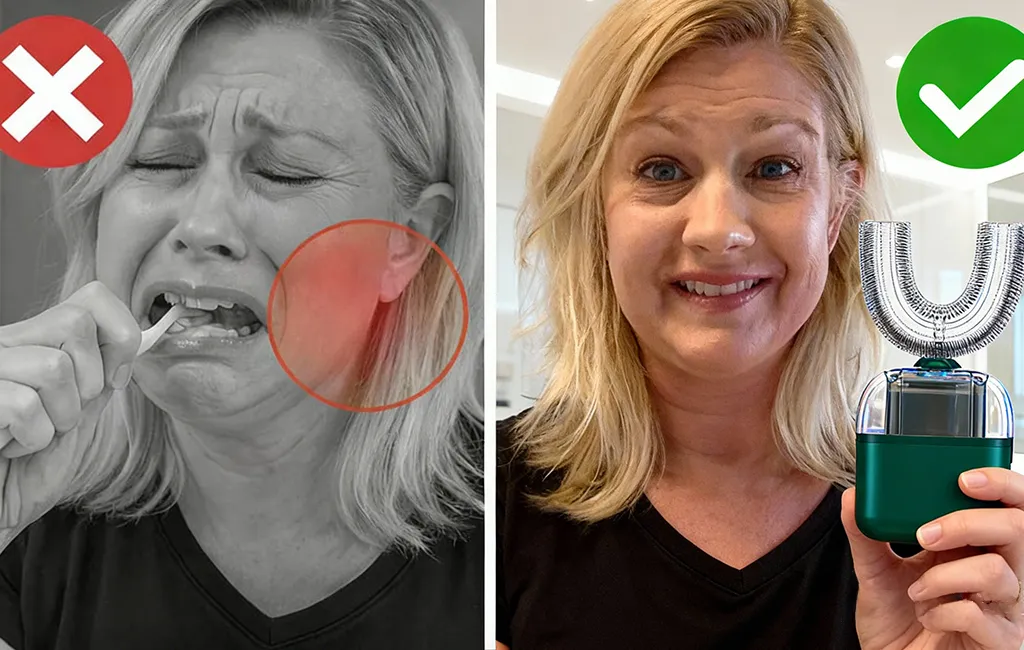
It was a full-mouth ultrasonic cleaning system. She explained it uses the exact same frequency technology that dental clinics use for professional cleanings. You simply bite down, and the ultrasonic waves reach the 40% blind zone that bristles physically cannot touch. No effort. No bleeding. No pain.
She showed me data that made me feel ashamed:
The massive difference isn't genetics. It isn't diet. It is simply the tool.
To understand how that strange "Japanese mouthguard" could beat my $200 electric toothbrush, I looked up the research of Dr. David Harlan, a renowned dentist in Chicago.
Dr. Harlan has seen thousands of patients just like me in his career: We brush religiously, we floss daily, yet we still come back with receding gums and loose teeth as we age.
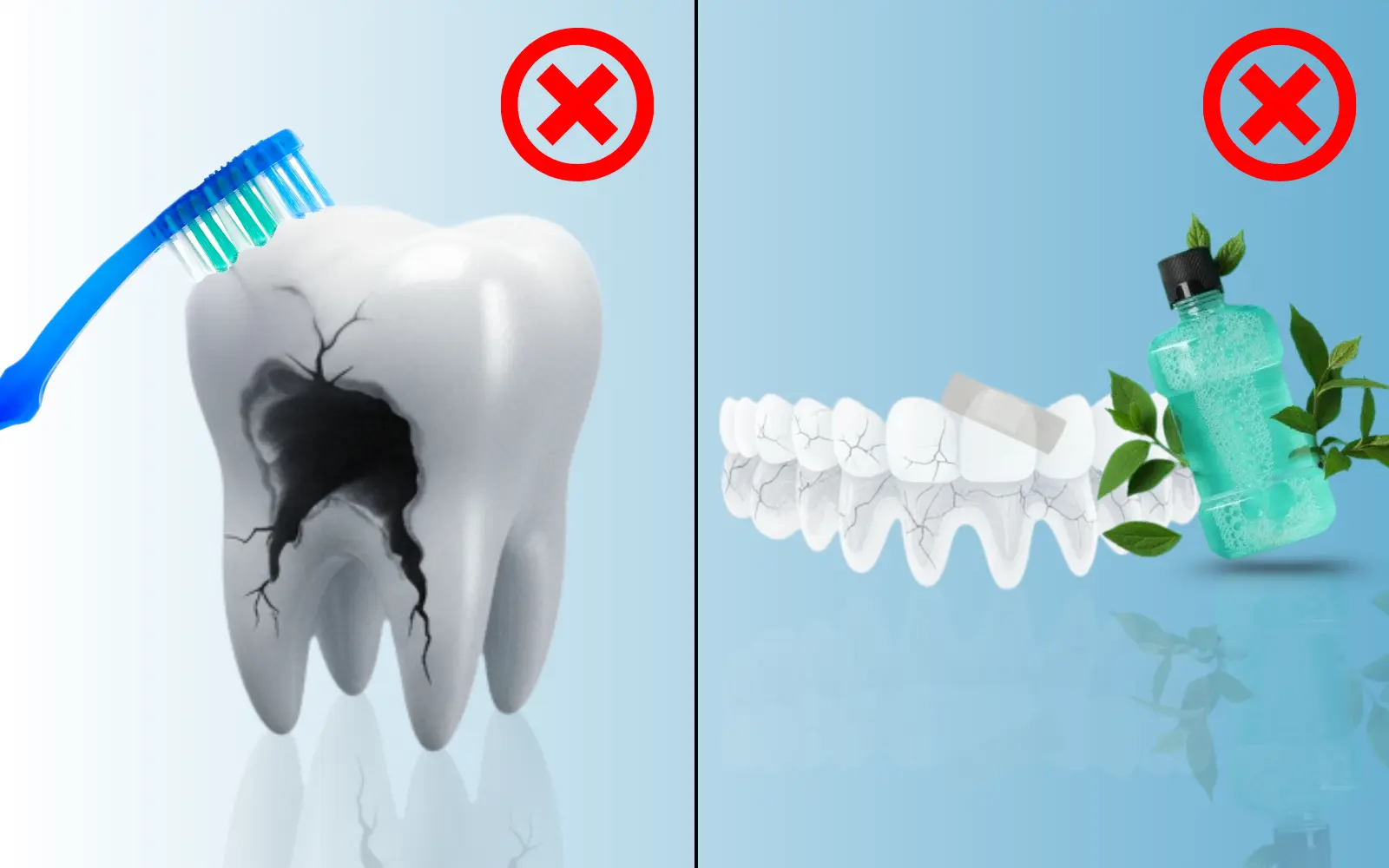
He revealed a fact that toothbrush companies will never print on the box: Traditional brushing design, from a physics standpoint, is destined to fail.
"No matter how perfect your technique is," Dr. Harlan explains, "traditional bristles can only physically reach about 60% of your tooth surfaces. The other 40%—deep between teeth, behind back molars, and under the gumline—is a 'dead zone' that physical bristles can never reach."
This is the core of the problem: Most people only brush for 45–60 seconds. While you are carefully cleaning your front teeth, bacteria are multiplying wildly on your back molars, eating away at your jawbone.
Dr. Harlan uses a perfect analogy: "It’s like trying to mop a floor one square inch at a time while it’s still raining. By the time you finish the last spot, the first spot is dirty again."
You need technology that makes the rain stop everywhere at once.

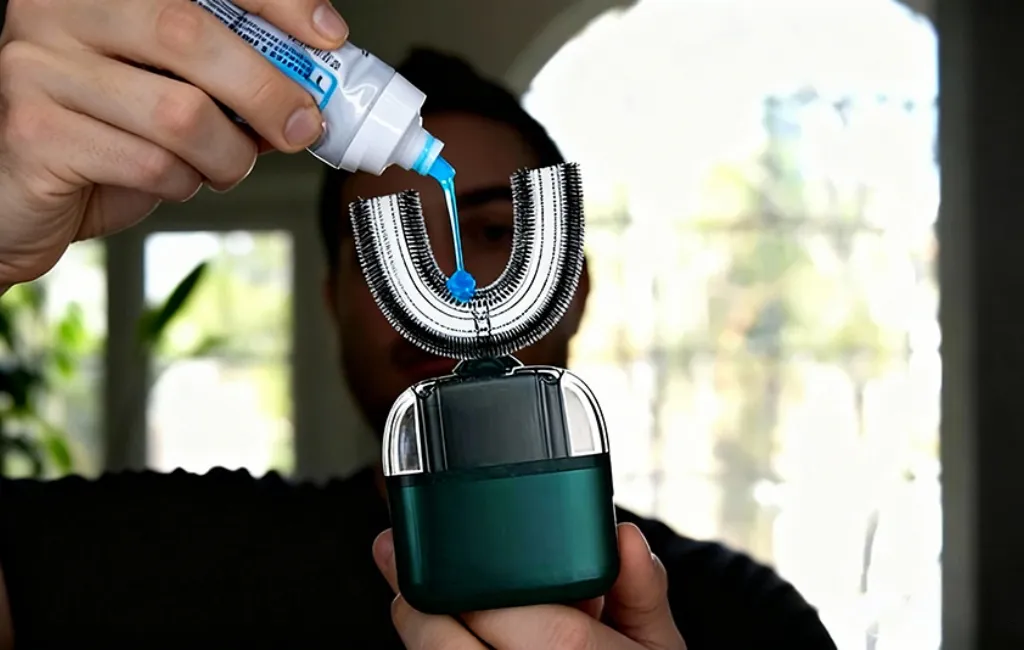
This is the logic behind the Hatmeo Ultrasonic Smartbrush. It completely abandons the outdated concept of "cleaning one by one."
Dr. Harlan calls it "Simultaneous Full-Mouth Cleaning":
Back at the clinic, when my hygienist admitted to the "Ultrasonic Signature," I asked her: "If this thing is so good, why don't you recommend it to us?"
She looked around to make sure no one was listening, then whispered the chilling truth: "We all use these ourselves... but we can't officially recommend them. It's an unspoken industry rule."
She looked me in the eye: "If everyone in this room started using this Japanese technology, we would lose about three-quarters of our business overnight."
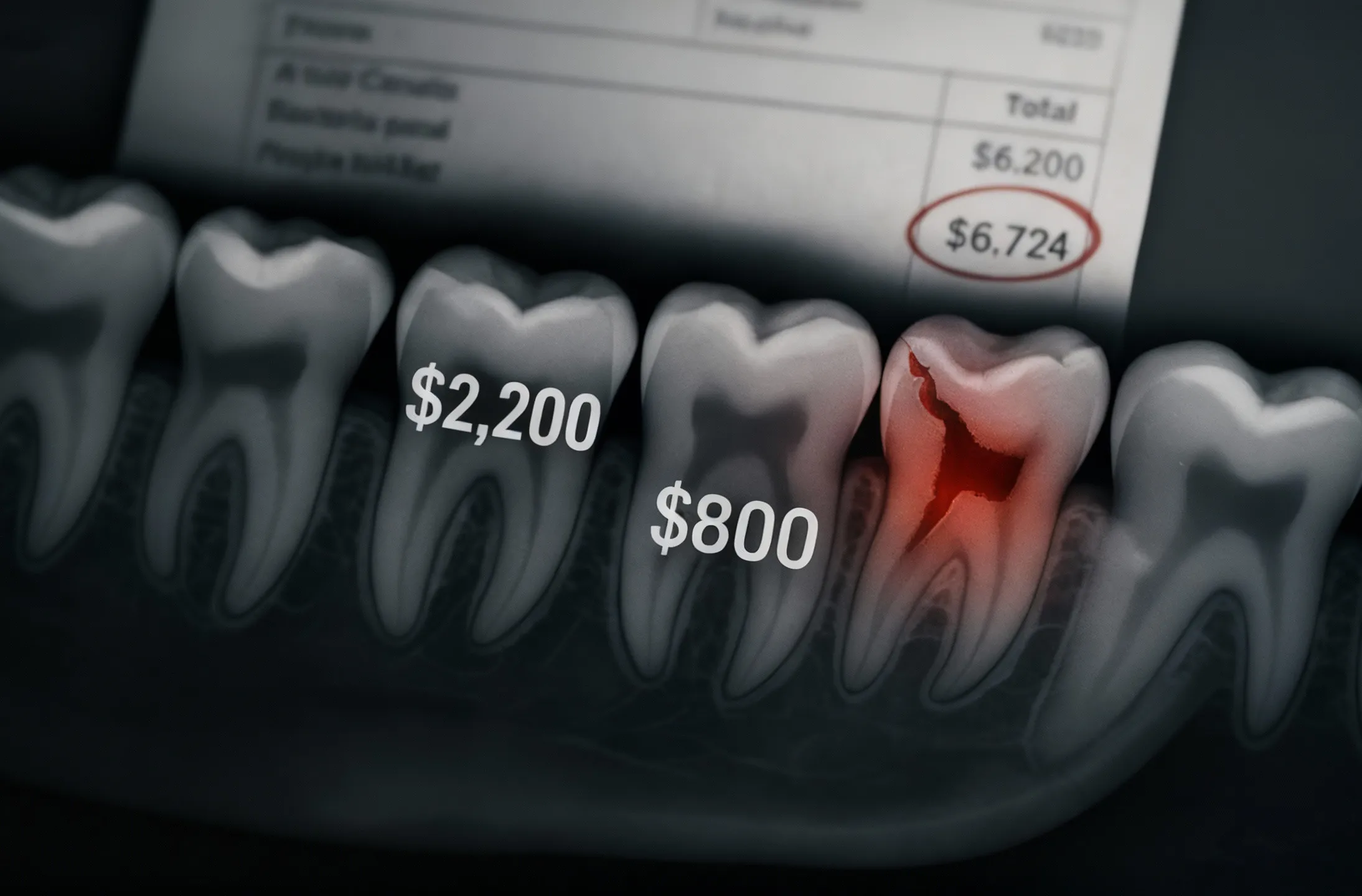
This isn't just about the cost of fillings. It's about your dignity in your later years. She showed me statistics that sent chills down my spine:
Americans: By age 60, the average person has lost 8–10 teeth.
Japanese: Thanks to widespread ultrasonic tech, the average person loses only 2–5 teeth.
This is the difference: Do you want to be enjoying steak and corn at age 70, or stuck eating soup and mush? Do you want to smile with confidence, or be afraid to open your mouth because of gaps?
The 40% blind zone that bristles can't touch is exactly where gum recession starts, leading to loose teeth and eventually... dentures.
While the U.S. spends over $124 billion a year on preventable dental problems, countries using ultrasonic technology spend almost nothing—and they keep their original teeth.
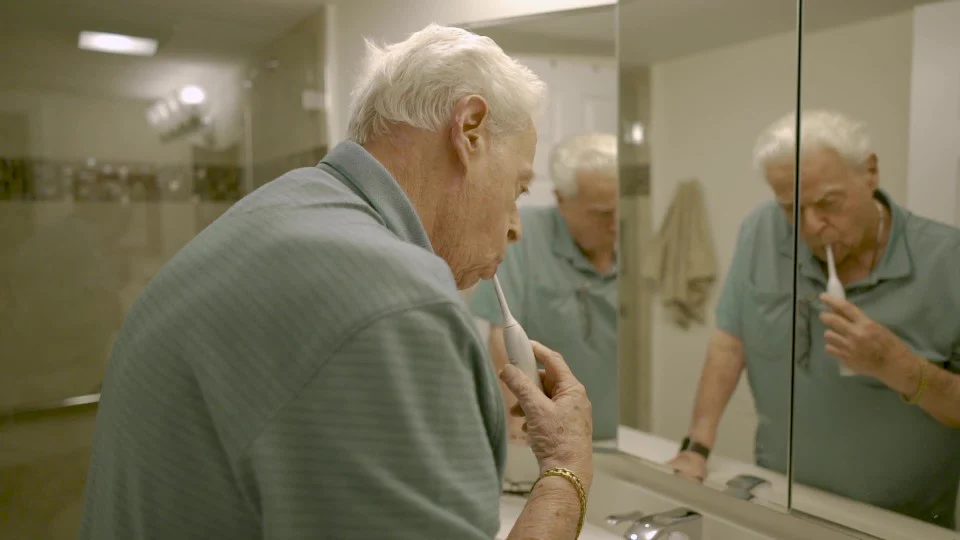
Here's what electric toothbrush companies don't want you to know:
Those brushes still require you to:
One study found that most people using electric toothbrushes:
An expensive electric toothbrush doesn't fix the fundamental coverage problem.
You're still cleaning one tooth at a time. You're still depending on your technique. You're still probably missing 40% of your tooth surfaces.
The Smartbrush eliminates the coverage gap entirely.
Before I left, my hygienist gave me one last piece of advice. It wasn't medical advice; it was survival advice.
"The dental board is already discussing restrictions on consumer ultrasonic tech," she warned. "They're citing 'safety concerns'—even though Japan and Europe have used it safely for decades. We all know whose profits they are trying to protect."
She pointed to the Hatmeo Ultrasonic Smartbrush link: "Stock up now. Before it gets classified as a 'prescription-only device' and the price jumps 10 times."
My sister didn't believe me before. She insisted on using her "brand name" electric brush. Last month, she paid $4,300 for three hidden cavities and a tooth she had to pull because it was too loose.
Me? Since switching to Hatmeo Ultrasonic Smartbrush, my routine check-up cost $115. The dentist even joked, "Why are you here? There's nothing for me to do."
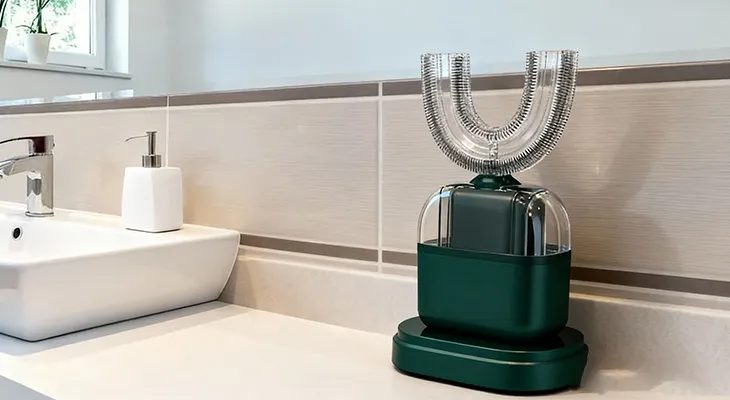
Don't waste money on cheap knockoffs online. Real medical-grade technology requires the specific 40,000 Hz frequency. The Hatmeo Ultrasonic Smartbrush I use is one of the few medical-grade devices still available to the public.
No fakes, the original is essential! Don't settle for an old, outdated prototype!
I’ve decided to offer a special limited-time discount, giving you the chance to own your very own Hatmeo Ultrasonic Smartbrush at 41% OFF.
Yes, you read that correctly.We're offering you a 30-day trial period.
You get a full 30 days to try out the Hatmeo Ultrasonic Smartbrush and see for yourself how effective it is.
If it works as promised, you can keep it and enjoy healthier, pain-free brushing for years to come.But if, for any reason, you're not completely satisfied…Or if you believe there's a better solution out there…
Just reach out to us anytime within those 30 days, and we'll refund your money—no questions asked, no hassle.
Our team at Hatmeo ensures you only pay if you’re 100% happy with the product. Otherwise, the cost is on us.
Sounds fair, right?And don’t worry—our support team is always easy to reach.
📧 Email us at customer@hatmeo.com
This is what a truly risk-free offer looks like.
From the moment you click that button below, your time, money, and satisfaction are fully protected.There’s absolutely zero risk in giving the Hatmeo Smartbrush a try today.
Q: Is this safe for sensitive teeth and gums?
Yes. The ultrasonic vibrations and soft bristles are gentler than manual scrubbing while being more effective at removing plaque. Many users with sensitivity find it more comfortable than traditional brushing.
Q: Can I use this if I have crowns, veneers, or braces?
Yes. The Smartbrush is safe for all dental work. Many users with braces report it's easier to clean around brackets than traditional brushing since it reaches all surfaces simultaneously.
Q: Will this replace flossing?
The ultrasonic vibrations and bristle coverage reach between teeth better than traditional brushing, significantly reducing the need for flossing. However, for optimal gum health, occasional flossing is still recommended.
Q: Does it really work in just 30 seconds?
Yes. Because it cleans all surfaces simultaneously, 30 seconds of full-mouth coverage equals several minutes of sequential tooth-by-tooth brushing. The ultrasonic action is also more efficient at breaking up plaque than manual scrubbing.